Complete Paris Travel Guide 2026: Top Sights, Tips & Insider Secrets
Last Updated: June 2026
This post may contain affiliate links. I only include links to sites and services that I genuinely use or recommend after careful research, and you will never pay more by using them.
Paris has a way of making a big impression, some people fall in love with its charm, culture, and energy, while others find it overwhelming and hectic. There’s a reason it’s called the City of Light: from iconic landmarks to hidden streets, cafés, and vibrant neighbourhoods, there’s always something to see, do, or taste. I’ve been fortunate to visit twice, and my friend (who has lived in Paris for over a decade!) has shared plenty of insider tips for us. In this guide, I’ll help you navigate the city’s must-sees, practical tips, and local secrets so you can experience Paris without getting lost in the chaos.
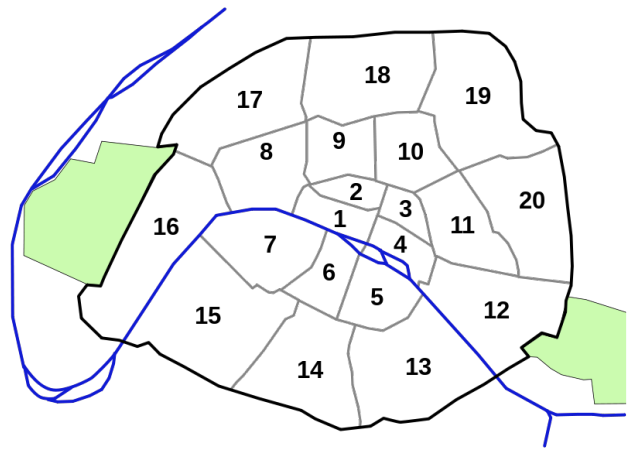
First some geography. Paris is made up of 20 arrondissements, referred to as the “twenty little cities“. They form a spiral, starting from the 1st in the centre of the city and running clockwise until the 20th in the east. Check out my Paris by Arrondissement Guide to get a feel for each of the 20 neighbourhoods.
Paris Travel Essentials
Know before you go:
• Tap water is safe to drink, so when dining out, ask for une carafe d’eau to avoid being charged for bottled water.
• Tipping isn’t expected here. Don’t feel obligated to leave anything, though you can round up the bill or leave a few euros if you’d like.
• Free Mobile has self-serve kiosks that dispense French SIM cards you can use for your entire stay in France.
• Ignore the people in touristy areas trying to sell you things or asking you to sign a petition, and do not let anyone ‘make’ you a bracelet.
• Keep a close eye on your valuables the entire time you are in touristy areas and on the metro, pickpockets are sneaky here.
• Public consumption of alcohol is permitted and socially normal in France, so take that bottle of wine for a picnic!
My Top Things to do in Paris
Paris is a very large city, and there is a lot to do! Depending on your particular likes and dislikes, you may want to do certain activities more than others. These were my favourite things I did while I was in Paris :). My friend has lived in Paris for 10 years, and using her recommendations I created the Paris Guide by Arrondissement. Check it out for even more ideas!
Go on a ‘pastry walk’ and bring your goodies for a picnic near the Eiffel Tower
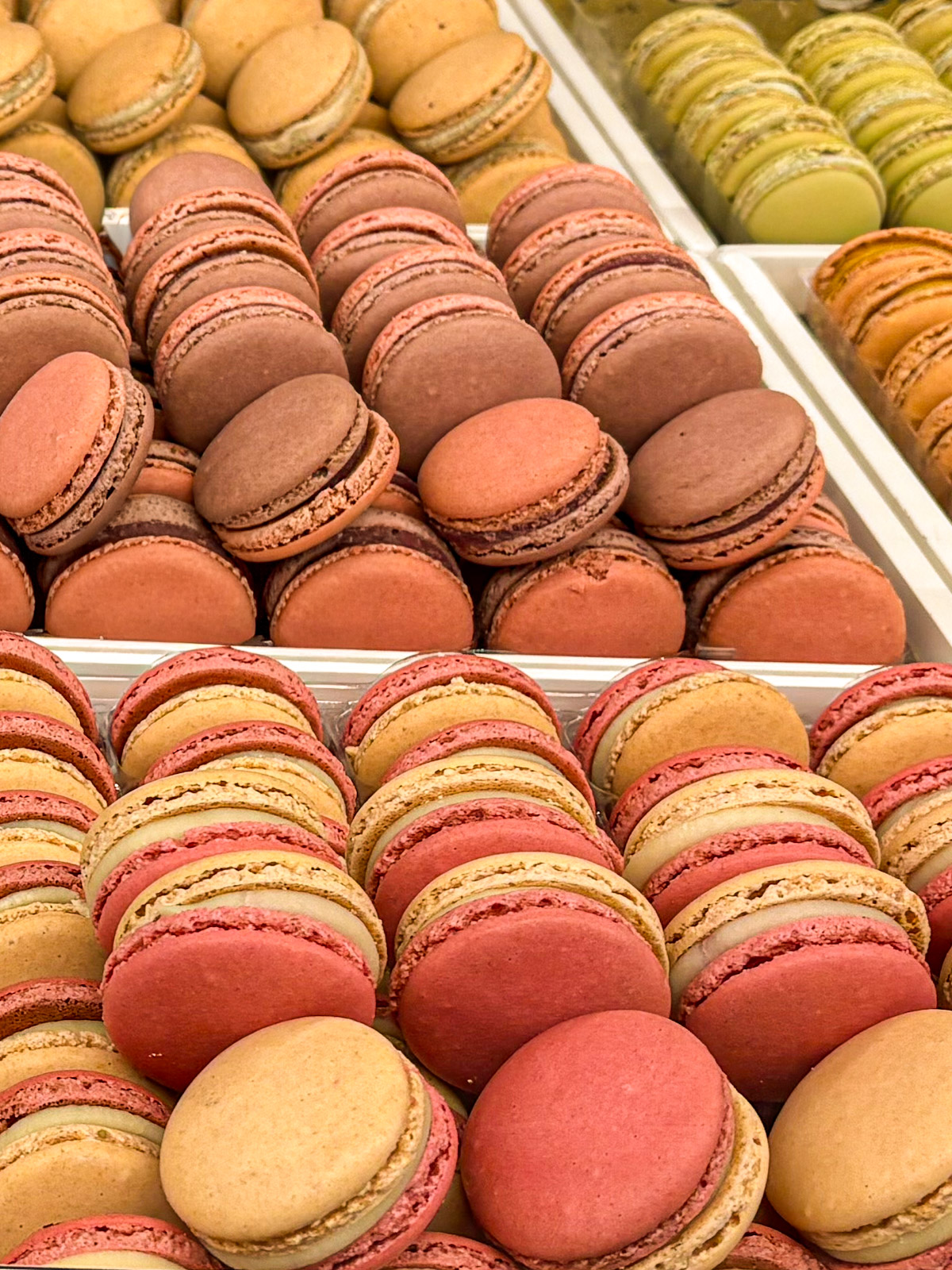
Paris is packed with pâtisseries and sweet shops and they truly are world class! You’re in the city with the best pastries in the world, after all. One of my favourite days in Paris began with a wander through the Jardin du Luxembourg, followed by a self-guided pâtisserie crawl through the 6th arrondissement. From there, we continued our stroll toward the parks in front of the Eiffel Tower.
We found a shady spot beneath a tree with a perfect view of the tower, laid out our picnic blanket, and started snacking. What followed was a full sugar-coma nap – and honestly, there are worse places to fall asleep than under the Eiffel Tower in Paris.
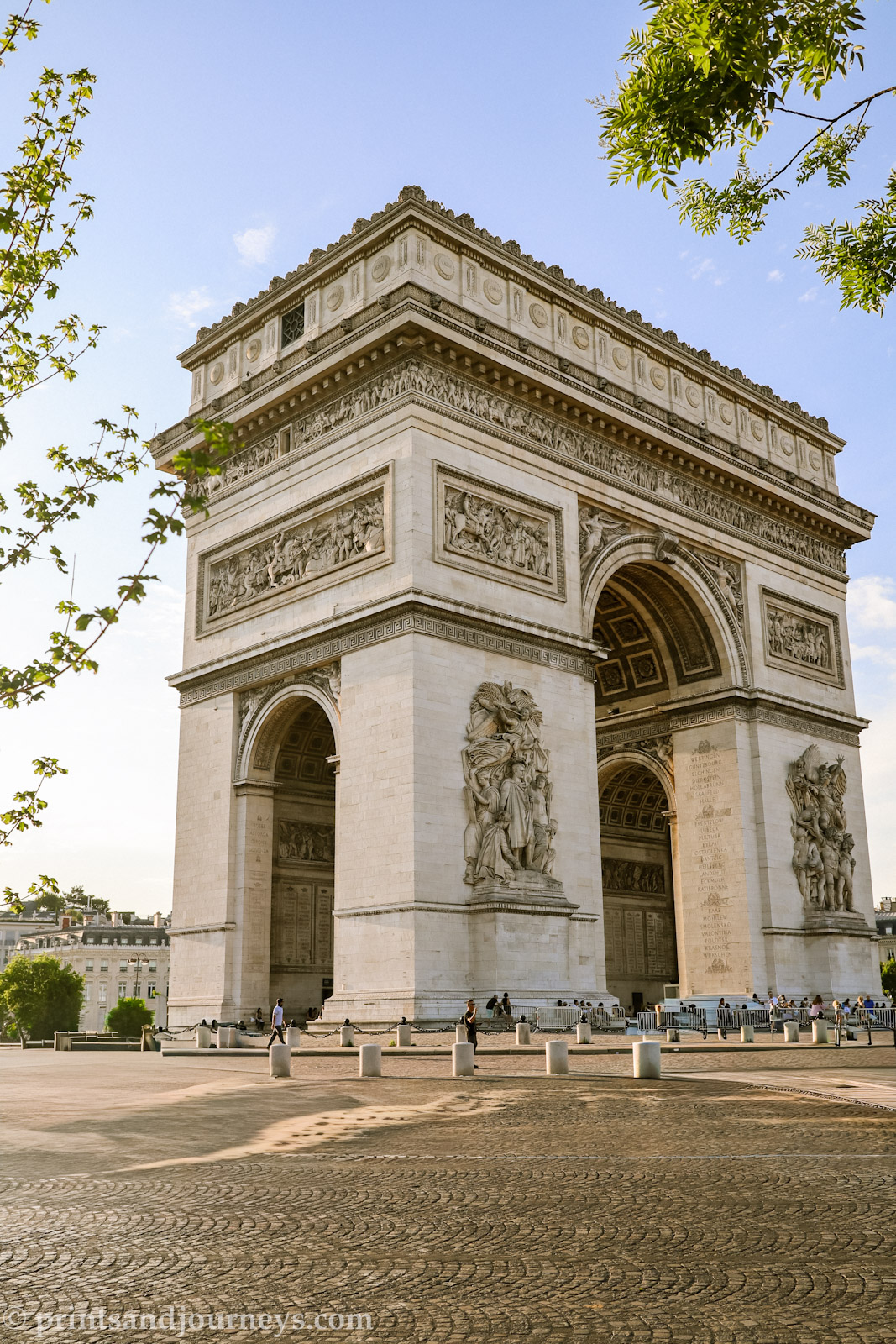
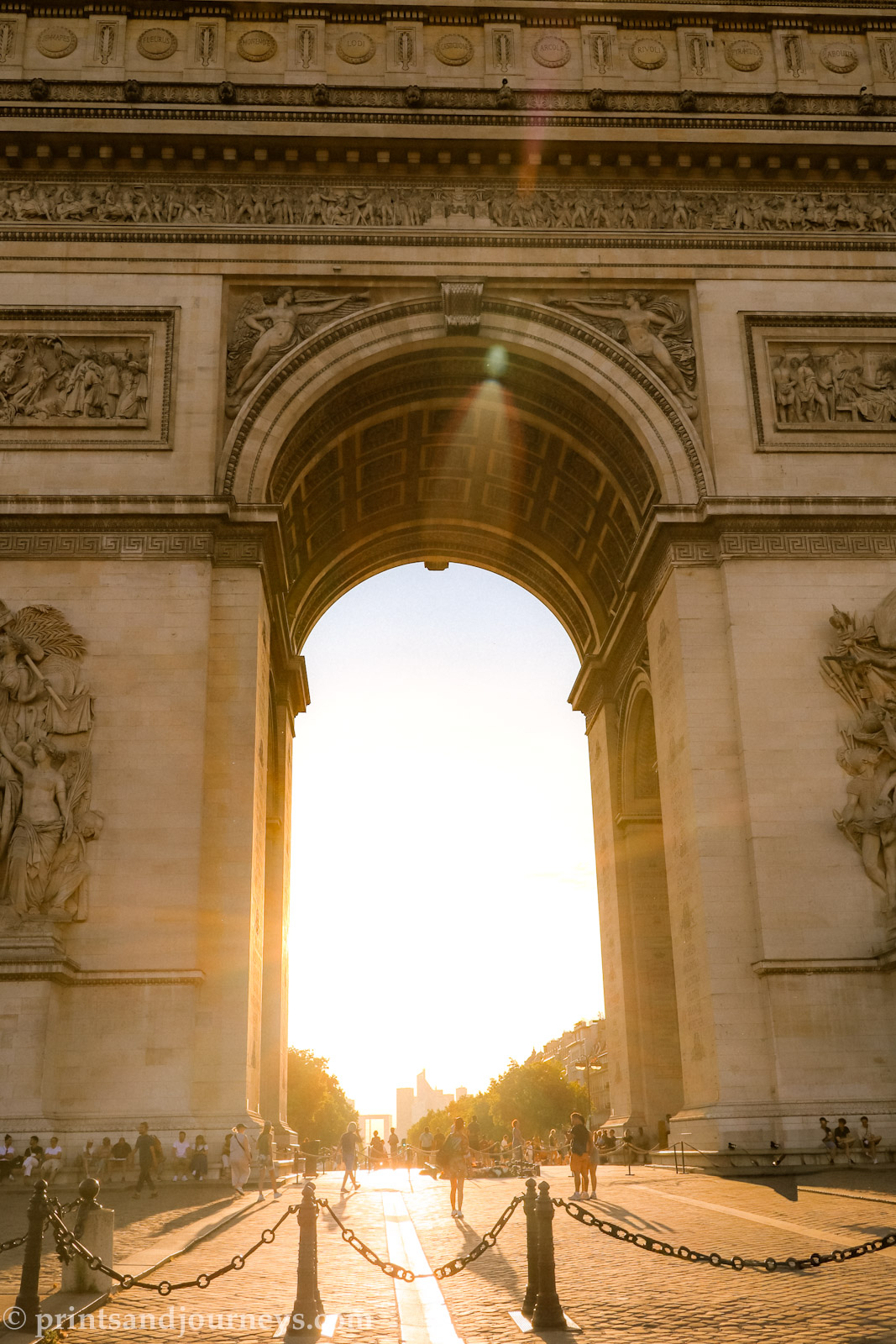
Visit the Arc de Triomphe at sunset
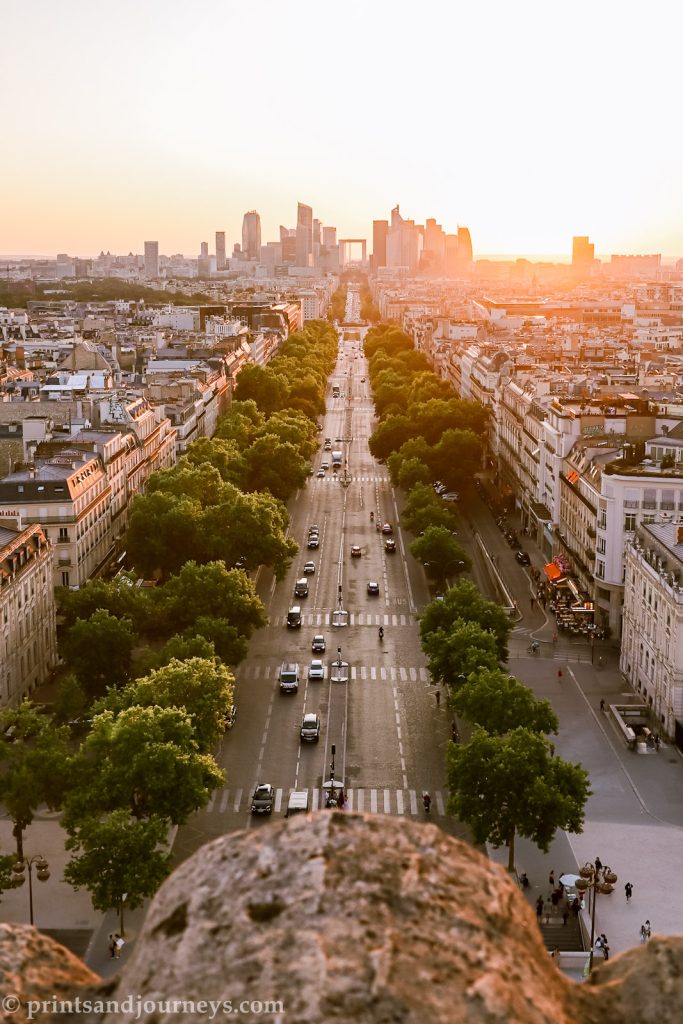
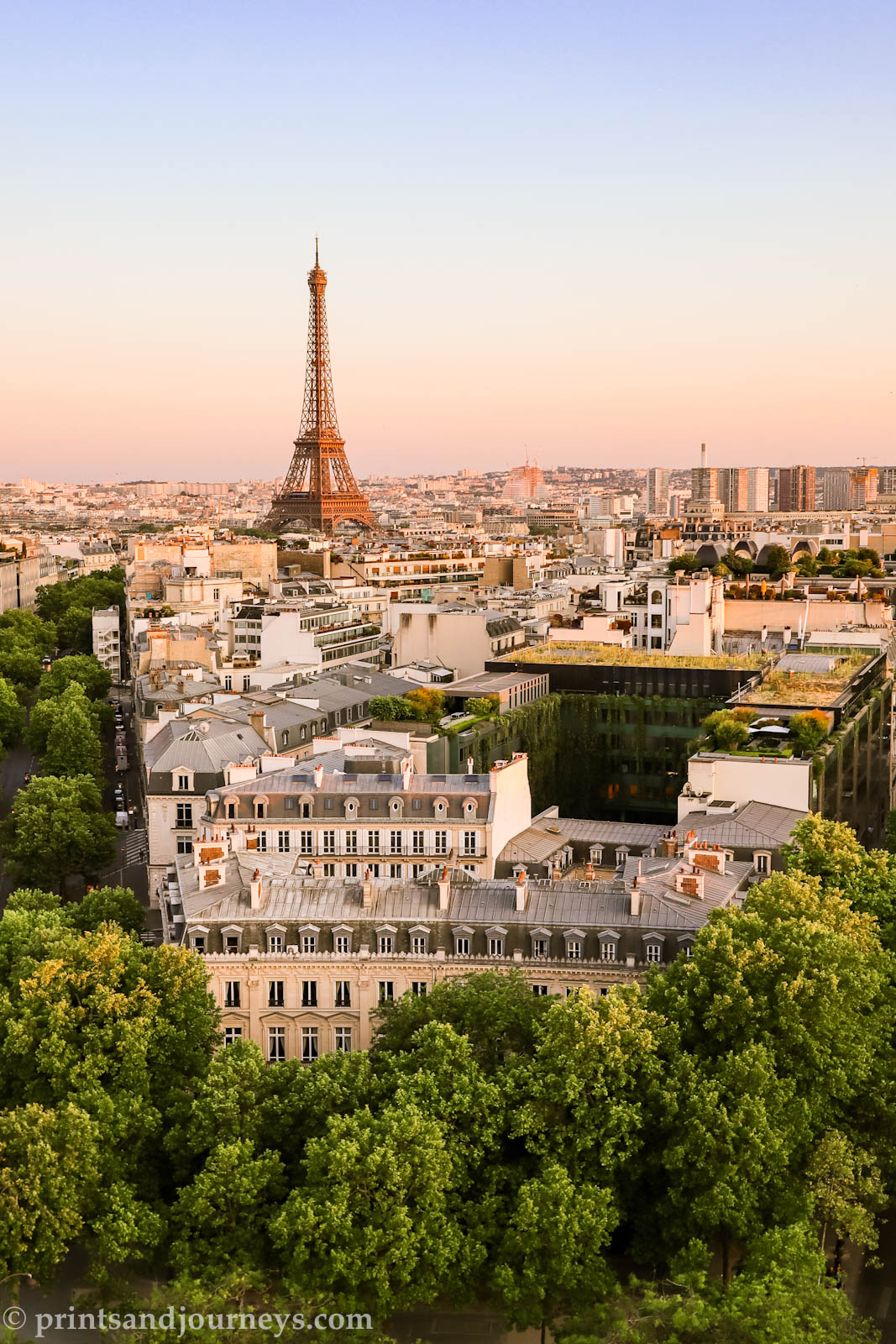
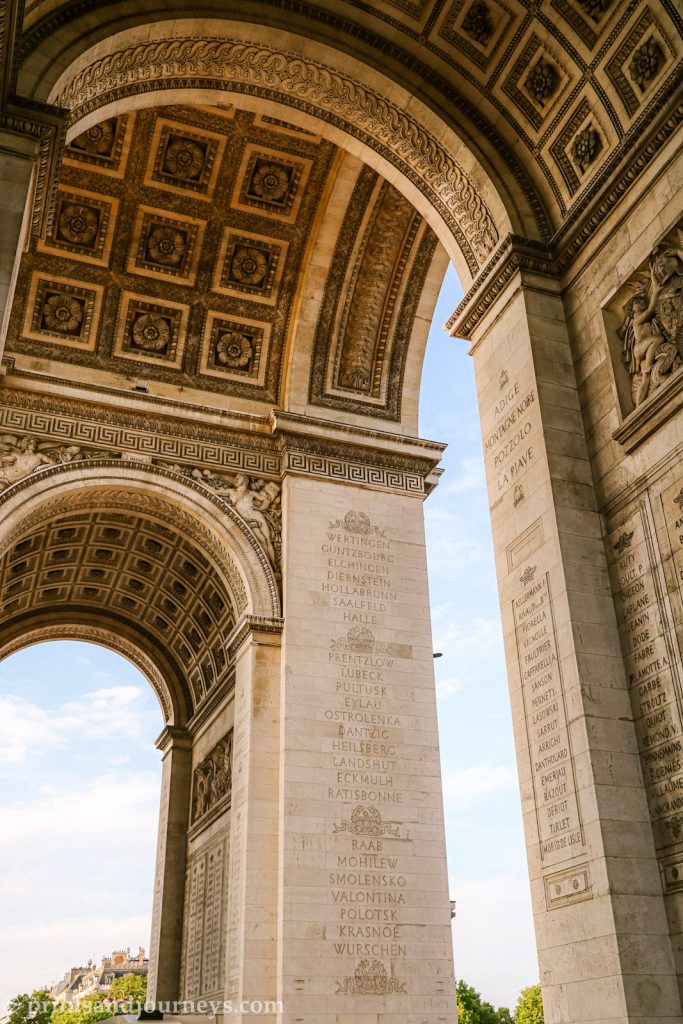
The Arc de Triomphe is a beautiful landmark in its own right and the view from the top is one of the best in the city. Sunset is the ideal time to visit, with soft pink and orange colours. Also, if you stay a little longer you’ll be rewarded with both daylight and nighttime views of the city!
To visit at sunset, you’ll need to plan ahead and purchase tickets online through the official website. Tickets seem to go on sale from 1-2 months in advance, but it is an unclear process, so check often. If your ideal time and date are sold out, check other ticket providers like GetYourGuide. You can also get access to the Arc and a river cruise paired together for a good price here. Look up the sunset time on the day you want to visit and book a time slot for 1 hour or more before that. Even with a reservation, you will have to wait in line for your turn to climb up the narrow staircase. This experience is not recommended if you are extremely claustrophobic!
Take a Seine river cruise at sunset or after dark
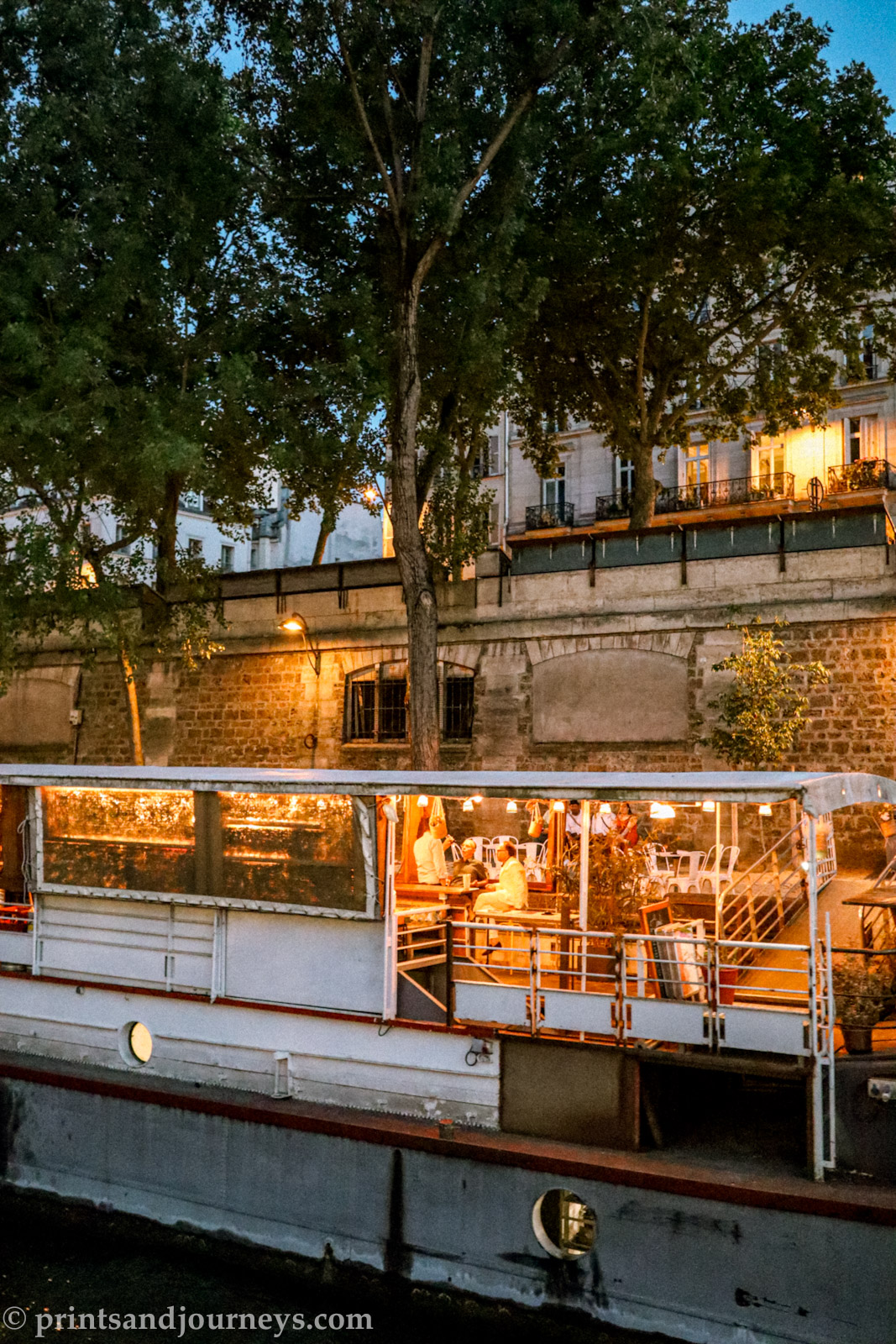
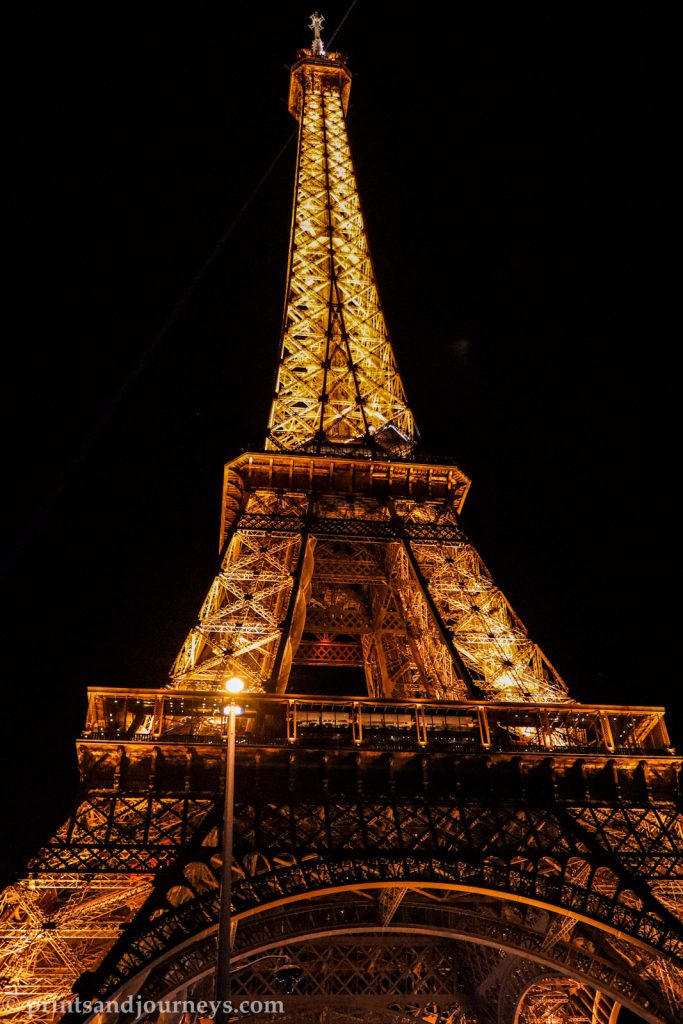
Another activity done best at golden hour! The goal of doing this cruise at sunset is that by the time you return to the docks by the Eiffel tower, you will catch it sparkling and lighting up on the hour (the Eiffel tower sparkles at the beginning of every hour after dark and it is beautiful!). We booked this river cruise, because it felt fancy to get a glass of wine and enjoy the views, and it is with music instead of a guide talking the entire time.
You’ll want to arrive early to snag a spot on the rooftop deck. Which side of the boat you sit on isn’t too important, since the cruise travels up the Seine and then back down, giving you views of both sides along the way. Yes, it’s touristy – but it’s also absolutely worth it and such a cool way to see Paris from the water. If you’re looking for a different experience, there are also dinner cruises where you can enjoy a meal while you cruise.
Visit a museum
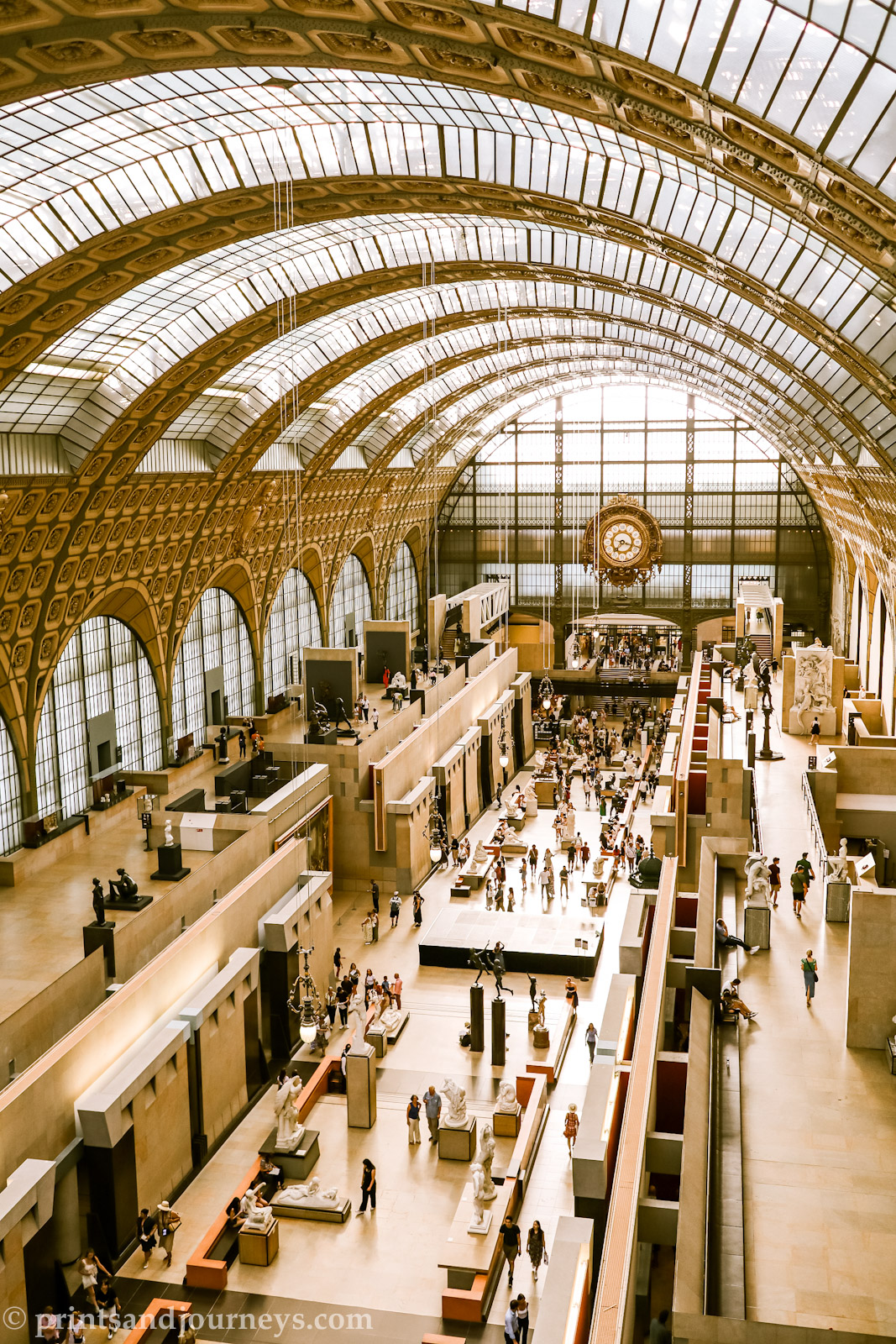
Paris is basically a museum paradise—there’s something for every taste, from world-famous classics to quirky niche spots. I don’t have any formal art education, but I love experiencing art – especially paintings, photography, mixed media, and sculpture. When I visited Paris the first time, I went to the Louvre and enjoyed myself but was overwhelmed by the size of the place! The most recent trip I visited Musée d’Orsay and while it is still very busy, I really enjoyed looking at the impressionist art from Monet and Van Gogh. Where you go is up to you, but I would suggest exploring some of the lesser known museums to enjoy the art in a little more peace and privacy. Below are the world famous art museums in Paris and information about them to help you make your choice:
Musée de l’Orangerie
What it shows: Mainly Monet’s Water Lilies, plus other 20th-century artists like Matisse and Modigliani.
Famous artists: Monet
Vibe: Small, serene, and focused—ideal if you love Impressionism without the crowds of the Louvre.
Price: ~€12.50 for adults.
Advance Booking: Recommended, particularly on weekends and holiday periods.
The Louvre
What it shows: Western art, ancient civilizations, Egyptian antiquities, Greek and Roman sculptures, Islamic art.
Famous pieces: Mona Lisa, Venus de Milo, Winged Victory of Samothrace.
Vibe: Huge, overwhelming, iconic. You could spend days here.
Price: ~€22–€32 for adults (free for under 18s and EU residents under 26 on presentation of ID).
Advance Booking: Strongly recommended, especially for peak times (book 2–3 weeks ahead in busy months)
Musée d’Orsay
What it shows: 19th–20th-century art, especially Impressionists and Post-Impressionists.
Famous artists: Monet, Van Gogh, Renoir, Degas.
Vibe: Former train station turned elegant gallery; perfect if you love paintings and sculptures from 1848–1914.
Price: ~€16 when purchased online.
Advance Booking: Recommended (especially weekends); first Sunday of each month is free but still requires online booking.
Centre Pompidou
What it shows: Modern and contemporary art, including paintings, sculptures, design, photography.
Famous artists: Picasso, Kandinsky, Duchamp.
Vibe: Bold, colorful building with inside-out architecture, very modern and edgy.
Price: ~€17 for standard entry tickets.
Advance Booking: Recommended, as it’s popular and tickets can sell out.
How to get to Paris
Paris is a major hub, so getting here is easy. We flew into Charles de Gaulle, which was quick and straightforward, and on our way home took a train from Biarritz. Trains from as far as London, Brussels, or other European cities are also super convenient. Once you arrive, the city centre is easily reachable, and Paris itself is compact enough that you can explore most of the main sights without a car. Here are the main travel options:
Option 1: Flying in ✈️
Paris has two main international airports.
1. Charles de Gaulle Airport (CDG): Most flights from Asia, North America, or Africa arrive here. CDG is well connected to the city centre. During the day, you can take the RER B train, which takes about 35–45 minutes to central stations like Gare du Nord. If you arrive late at night, the train won’t be running, so a taxi with a fixed fare is the best option.
2. Orly Airport (ORY): Flights from other parts of Europe or low-cost carriers usually arrive at Orly. It’s actually closer to the city centre than CDG, and you can get into town by bus, train, or taxi.
Option 2: By Train 🚆
Paris is so well connected by train that you can likely reach it from almost anywhere in Europe. Use Rail Europe to compare prices between carriers and book your trips. Some of the main train companies include:
Eurostar: From London (~2h 20m to Gare du Nord)
Thalys: From Brussels (~1h 20m to Gare du Nord) or Amsterdam (~3h 20m)
TGV: Regional trains in France, and also to Germany, Switzerland and Italy.
Option 3: By Bus 🚌
Getting to Paris by bus is a great option if you’re on a budget.
European trains aren’t cheap and can sometimes cost as much as low-cost flights, so it’s worth comparing buses, trains, and flights when planning your trip. Bus routes take longer than flying or driving, but an overnight ride can save on accommodation if you don’t mind sacrificing some sleep. I traveled around Europe by bus in my 20s, but now I’m older and prefer splurging on a train. Some of the main bus carriers are FlixBus, BlaBlaBus, and Eurolines. Check out Budbud to compare prices between them.
Option 4: By Car 🚗
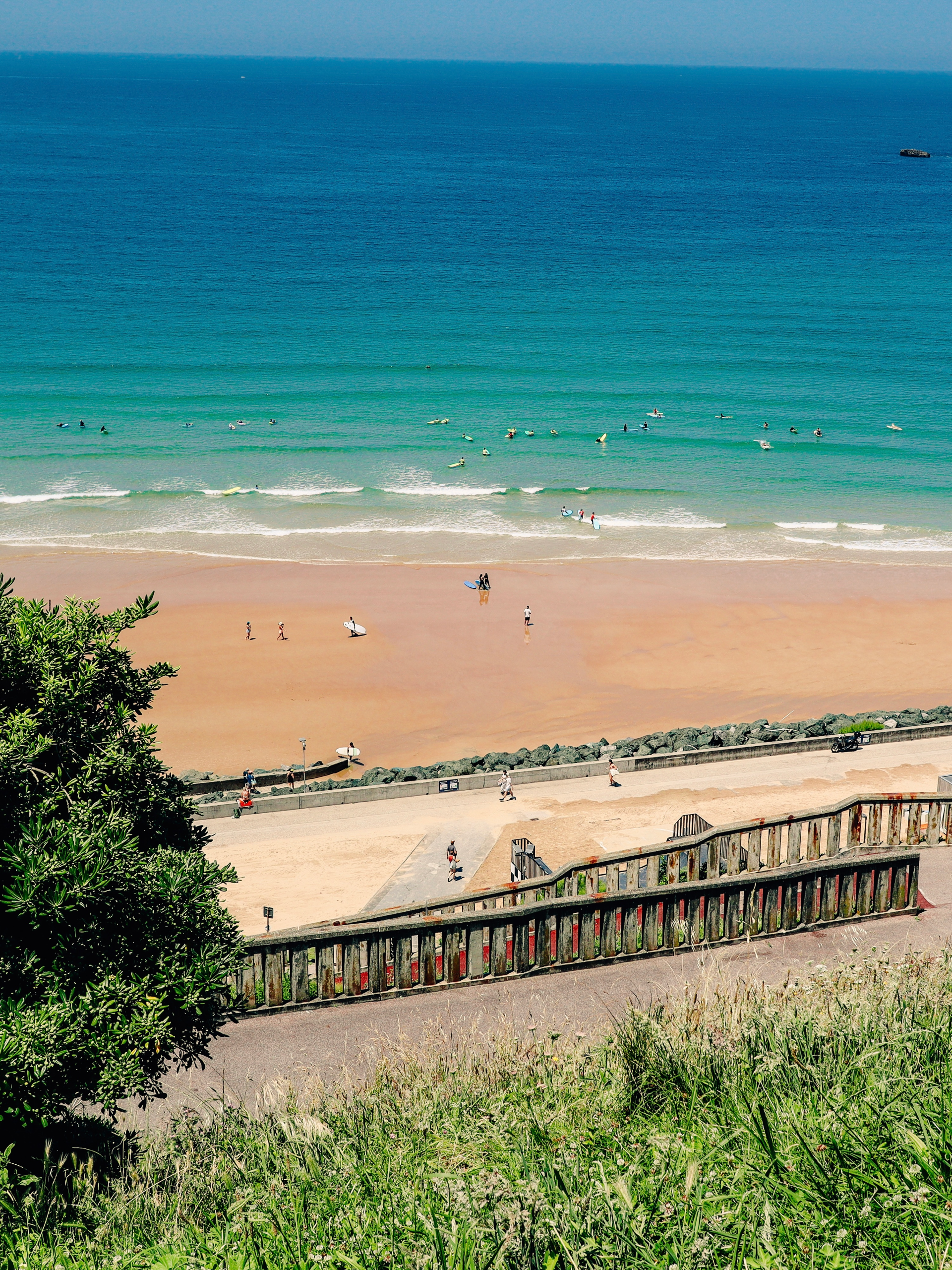
Renting a car isn’t necessary for getting around Paris (it can actually be more of a hassle than a help) but it can be useful for day trips to places like Versailles or Champagne. Driving in the city is stressful and chaotic, with certain streets restricted to cars that have the proper Crit’Air sticker, and fines can pop up months later without you realizing it. Parking is also difficult to find and very expensive, so if you do rent a car, it’s best to stay outside the city centre and use public transit to get into town. If you are getting here by rental car, I would suggest picking a drop off agency outside the city centre to avoid a stressful day. For us, we dropped our rental car in Biarritz and took the train to Paris to avoid any stress. I use Discover Cars to compare prices and book, it is reputable and we have had no problems. Make sure to check the rental company’s reviews before booking!
Getting Around Paris
Paris is incredibly easy to navigate, and you don’t need a car to get around. The Metro is fast, affordable, and reaches nearly every corner of the city, while buses are great for sightseeing as you move between neighbourhoods. A 10-journey reloadable card may be good idea for your stay and it can be used on both the metro and the busses. Many central areas are very walkable, making strolling one of the best ways to experience the city. For short trips, there are taxis, Uber, Bolt and even a self serve bike service called Velib.
Best Time to Visit Paris
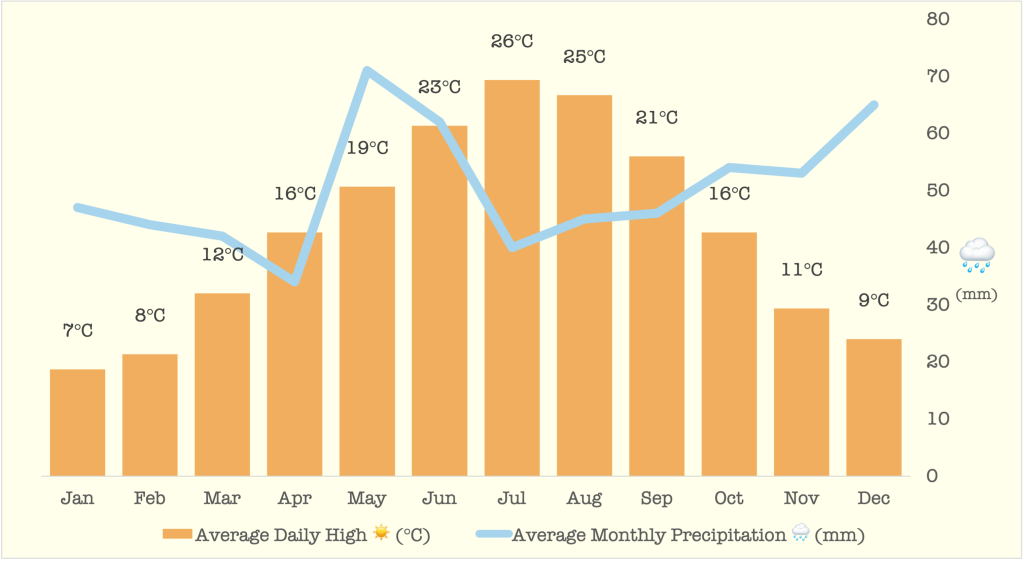
Paris is a big city with a lot of indoor activities, so I honestly don’t think there is a bad time to visit. We visited in June, and it was warm and dry which made for nice days walking around in the sun. While we were there, I remember thinking that Paris would be a nice place to visit in the fall or even winter when days are a bit shorter and temperatures cooler to experience a whole new vibe. If I were to go again, April or October would be the months I would choose to experience a less busy time but still nice weather.
Spring (March – May) 🌱
Spring in Paris is lively yet far less crowded than summer, making it an ideal time to explore. Temperatures hover in the mid-teens °C, and interestingly, April sees the lowest average rainfall, while May experiences the highest, so do with that information as you will 😉.
Summer (June – August) ☀️
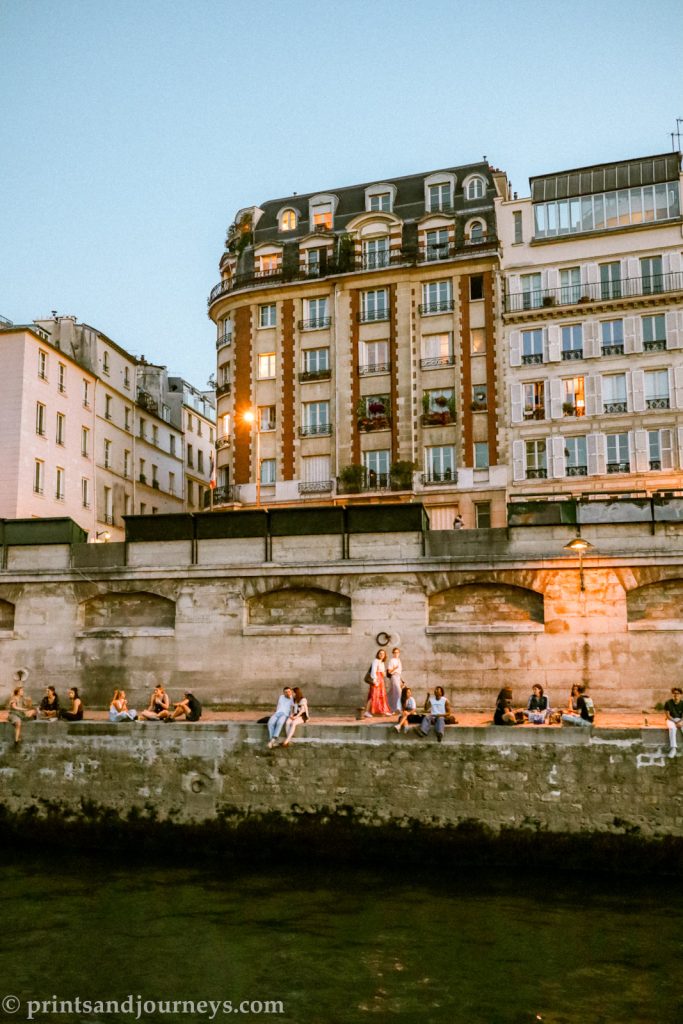
Summer in Paris is warm and vibrant, with temperatures often in the mid-20s °C. The city is at it’s busiest, but sunny afternoons are perfect for picnics in the Luxembourg Gardens, strolling along the Seine, or enjoying open-air cafés. Long days mean you can get a lot done in the daylight (we had to wait until 10pm to see the first sparkle of the Eiffel tower!). Street performers, summer markets, and blooming flowers add extra charm to the lively streets.
Autumn (September – November) 🍂
Autumn in Paris is crisp and colourful, with temperatures in the mid-teens °C and occasional drizzles. The crowds thin out after summer, making it ideal for wandering around and visiting tourist sites. Trees in the parks and along the boulevards turn gold, orange, and red, creating a stunning backdrop for strolling along the Seine or visiting open-air markets. Cozy cafés, warm pastries, and the soft glow of early evening lights make the city feel charming and romantic.
Winter (December – February) ❄️
Winter in Paris is chilly but charming, with temperatures usually hovering around 3–7 °C. Snow is rare and usually light, so while you might see a dusting here or there, Paris winters are mostly cold rain and crisp air rather than heavy snow. The city takes on a magical feel with festive lights along the Champs-Élysées, Christmas markets, and cozy cafés serving hot chocolate. Shorter days make museum visits, Seine walks, and warm bistro dinners especially inviting.
When to go? My vote would be late October to early November, you still get a good amount of daylight, the summer crowds have thinned, there is a cozy vibe in the air and you get to see the peak fall foilage colours at this time.
Custom Interactive Paris Map
✨ Custom Paris Travel Map Available for the price of $10 CAD.
I spent countless hours creating a detailed Google Map with my Parisian friend with:
• Saved restaurants, patisseries, cafés, culture, museums, travel, and more
• Ideal for independent travellers who don’t want tours but still don’t want to spend hours and hours researching each destination
• Made for people who want to explore and make sure they are hitting awesome spots, without over-planning
• Fill in your email address below to receive payment prompt and map link.
Frequently Asked Questions
How many days do you need in Paris?
3–4 days covers the highlights, while 5–7 days allows time for museums, neighbourhoods, and day trips. Spending over a week in Paris allows you to settle into the Parisian lifestyle, and since it’s such a big city, you’ll never run out of new things to experience.
Do I need cash in Paris?
Not usually – credit cards are widely accepted, but small shops may prefer cash.
Is Paris safe at night?
Yes, Paris is generally safe at night, especially in central, well-lit neighbourhoods. As with any major city, it’s best to stay aware of your surroundings, avoid quiet streets late at night, and keep an eye on your belongings in busy areas.
Is the Paris museum pass worth it?
The Paris Museum Pass includes entry to 50+ museums and monuments, like the Louvre, Musée d’Orsay, and Versailles. It’s worth it if you plan to visit several major attractions in a short time, but less useful if you prefer a slower pace or only a few museums.
Is Paris a good place to visit for solo travellers and families?
Yes – Paris works well for both! Solo travellers will find the city easy to navigate, walkable, and full of museums, cafés, and neighbourhoods to explore, while families benefit from parks, kid-friendly museums, and efficient public transportation that makes getting around simple.
Are Parisians really rude if you can’t speak French?
From our experience, not at all. While Parisians appreciate when visitors try a few basic French phrases, most people are polite and helpful, especially in tourist areas. A simple “bonjour” goes a long way and usually leads to a much warmer interaction.